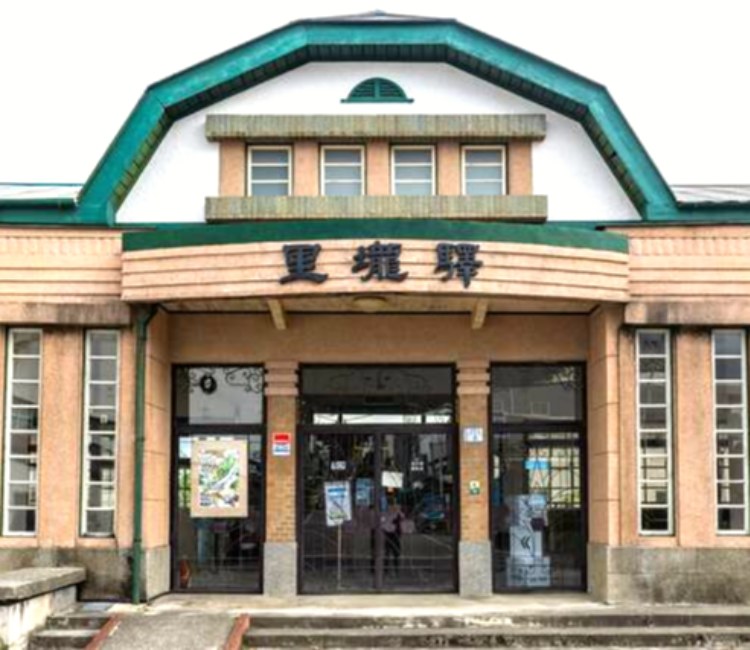
●Data: National Cultural Memory Bank During the Japanese occupation, to develop resources in eastern Taiwan, the Taitung Light Rail began construction in 1908 (Meiji 41) and was completed in 1911 (Meiji 44). On April 20, 1922 (Taisho 11), Lilong Station was established. In 1937 (Showa 12), Lilong was renamed Guanshan, and Lilong Station was renamed "Guanshan Station," which became Guanshan Station after the war. In 2002 (Republic of China year 91), it was designated a historical building cultural asset of Taitung County.
●Data: Bureau of Cultural Heritage #Station The railway between Taitung and Guanshan (formerly Lilong) began in 1910 (Meiji 43) as a privately operated light rail (manually pressed track). At the end of 1919 (Taisho 8), the Taitung Sugar Company converted this section into a 762 mm sugar railway, called the Taitung Sugar Company Line. During this period, a parking lot, or "post station," was located in Lilong, which is today's train station. In 1922, the Railway Department of the Taiwan Governor-General's Office acquired the Taitung Sugar Company's line and connected it with the Taitung Line from Hualien Port to Pushige (now Yuli Township), calling it the "Taitung Southeast Line," which became a national railway and began operation on April 20 of the same year. The construction of the Lilong post station building was around this time.
In 1980, the Hualien-Taitung Railway was widened to 1,067 mm, and the Railway Bureau built a new Guanshan Station on the east side. The old station was converted into a freight service office and later became idle. In April 2005, the Taitung County Government secured funding and contracted for repairs. After six months, it was finally restored to its original appearance. It is the only surviving example of a Japanese-era station building on the eastern railway trunk line. The old Guanshan Railway Station (formerly known as Lilong Station or Guanshan Station) is about 100 meters from the current Guanshan Railway Station. It is a Japanese-Western eclectic building. The building is symmetrical and imitates the peaked prairie barn style of North America (Anglo-American), mainly constructed of brick and wood. The front and back have a double-glazed (or double-sloped, double-glazed, double-sloped) roof (called "waist-folded roof" in Japanese), with chamfered corners and a jerkinhead roof at both ends, creating a unique hexagonal visual effect. There is a small semi-circular vent on the upper part of the wall, and below it are four-section windows with alternating geometric lines. Two sloping roofs (jaerkinhead roofs) extend to the left and right, and the exterior walls on both sides are made of English-style rain slabs. The double-sided hexagonal roof, combined with the semi-circular and alternating geometric lines, is an ingenious artistic design that is extremely rare in Taiwan. The double-sloped roof, also known as the Dutch roof, bears a striking resemblance to the double-sloped truss of the Massa roof, leading to its past misinterpretation as a Massa-style roof. However, there are differences. The double-sloped roof is a double-sloped roof, while the Massa-style roof is typically a double-sloped four-sloped roof or a four-sloped roof with a platform and iron railings.
In 2017, Guanshan Railway Station (Guanshan Station) became a sister station to the Guanshan Station on the Echigo Shindo Railway in Niigata Prefecture, Japan. Furthermore, Yoshitaka Watanabe, a first-class Japanese architect and author of "A Journey Through Japanese Architecture in Taiwan," published an article in the Hiroshima Prefecture China Shimbun in 2019, highly praising the decorative beauty of the Guanshan Old Railway Station's semi-circular windows and four-pane windows. He also commended the on-site preservation and original restoration of the building, emphasizing the preservation of human heritage. (2024, 9, 24)
Lilong Station
The railway between Taitung and Guanshan (formerly known as Lilong) began in 1910 (Meiji 43) as a privately operated light railway (also known as a hand-operated track). At the end of 1919 (Taisho 8), the Taitung Sugar Company converted this section into a 762mm sugar railway, named the Taitung Sugar Company Line. During this period, Lilong had a parking lot, or "station," which is today's train station. In 1922 (Taisho 11), the Taiwan Governor-General's Railway Department acquired the Taitung Sugar Company Line and connected it with the Taitung Line from Hualien Port to Pushige (now Yuli Township), calling it the "Taitung Southeast Line," which became a national railway and began operation on April 20th of the same year. The construction of the Lilong Station building likely occurred around this time. On November 1, 1937 (Showa 12), in response to local system reforms, Lilong Station was renamed Guanshan Station.
(Bureau of Cultural Heritage, Ministry of Culture; National Cultural Heritage Website)
Photographed on November 29, 2022